

What story did my brain write today and was it true?
Why our minds keep writing stories: the brain’s narrative habit
Our brains are wired to tell stories. Not just when we read a novel or share an anecdote, but all the time, as a part of how we interpret daily life. This instinct to narrate our experiences helps us make sense of our senses, emotions, memories, and social relationships. Without stories, life would be a chaotic stream of disconnected events.
Neural wiring: how memory and meaning-making regions collaborate
Research shows that building personal narratives linking events of your day to beliefs, values, and identity involves specific brain networks. In a study on autobiographical reasoning, scientists found that reflecting on the meaning of self-defining memories engages a network including medial prefrontal cortex, temporal and parietal regions areas associated with conceptual thinking, self-reflection and meaning making.
Meanwhile, during resting states, mind-wandering, daydreaming or self-reflection times when our brain “writes stories” by default the Default Mode Network (DMN) tends to activate. That makes sense: the DMN is thought to underlie memory recall, imagining the future, thinking about our self and others.
From events to narrative: how the Hippocampus organizes experiences into stories
Our brain doesn't just record every detail like a video camera. Instead, the Hippocampus a key memory center, plays a central role in weaving separate experiences together, drawing connections across time, and packaging them into coherent narratives.
When you live through a day different moments, interactions, thoughts the hippocampus helps weave them into a story, which becomes your internal explanation of “what happened.”

Story vs. Reality: Where things get fuzzy
If our brain builds stories to understand life, where does it stray from the truth? Quite often. Because “stories” made by the brain are not always objective reports they’re a blend of facts, interpretations, feelings, and assumptions.
Emotional coloring: memory distortion via feelings and biases
When an event triggers strong feelings sadness, anger, shame, excitement your brain tends to store not just what happened, but how it felt. Over time, those emotions can overshadow the facts, making memories less about “this happened” and more “this is how I felt it was.” That can slowly reshape your inner narrative to lean heavily on mood, not reality.
Missing context: assumptions, mental filters, and gaps in data
Much of what your brain fills in comes not from direct sensory data but from what you assume or infer. For example: you say “They didn’t greet me,” and your brain immediately constructs a story: “They ignored me because I’m unimportant.” That narrative might feel right but you may be missing information (they were distracted, upset, shy). Many self-stories don’t include verifying facts or context.
Combining threads: how disconnected events become a single “story”
Because the hippocampus and other brain networks integrate separate events into a unified memory framework, it’s easy for your brain to link disconnected events under a single narrative umbrella even when the link is thin. That sense of coherence feels satisfying, but often hides oversimplification.
Why your brain’s “story version” feels so real and convincing
When your brain constructs a narrative, it tends to preserve coherence, emotional tone, and personal meaning even at the cost of accuracy. That’s by design: narratives are powerful tools for learning, identity, and emotion regulation.
The emotional power of narrative (empathy, identity, meaning)
Storytelling doesn’t just organize facts, it taps into emotion. Compelling narratives trigger neurochemicals (like oxytocin) that reinforce emotional connection and empathy.
Narratives also help you craft a sense of self: your past, present, future. Through internal stories, you see yourself as a continuous person not a collection of random events. This structure gives meaning, identity, and a sense of belonging.
Narrative comfort: coherence over messy truth
The messy, ambiguous nature of real life mixed signals, conflicting details, randomness can feel overwhelming. By organizing things into a story with meaning and clarity, your brain provides psychological comfort. That internal story may emphasize patterns, purpose, or motives even when reality was chaotic or neutral.
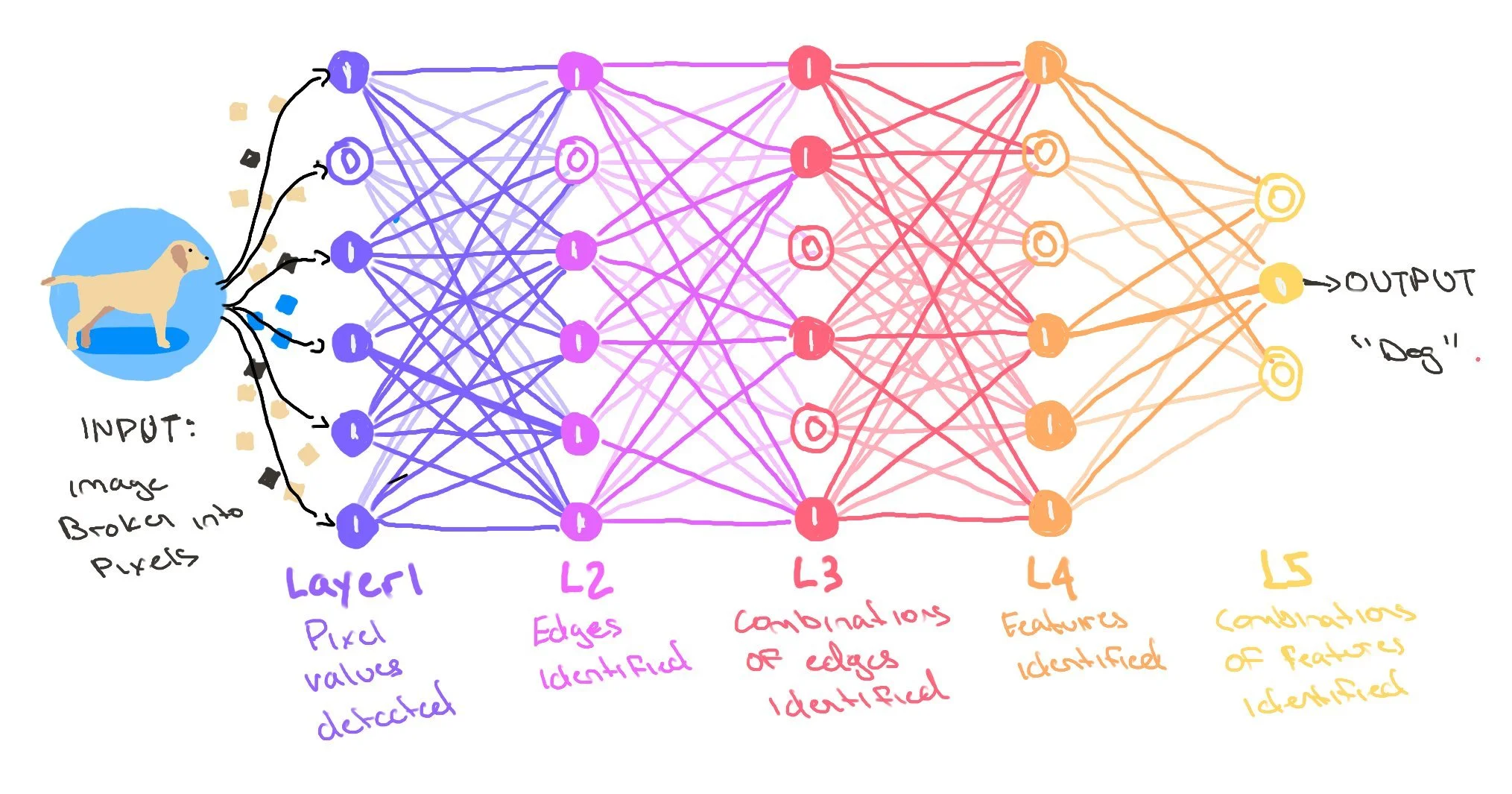
When “brain stories” mislead common pitfalls to watch out for
While storytelling is natural and often helpful, relying uncritically on those internal narratives can lead to misunderstandings, emotional pain, or even distorted self-views.
Jumping to conclusions and over-generalizations
Because the brain prioritizes coherence, it may fill gaps with assumptions and conclusions, like “I always mess up,” “Nobody cares,” “This always happens to me.” These generalized stories often exaggerate or amplify emotionally charged memories into recurring themes.
Negative self-talk and self-fulfilling prophecies
If your internal story emphasizes failure, rejection, or inadequacy, you may start behaving in ways that reinforce that story avoiding new opportunities, expecting rejection, acting defensively. Over time, the brain’s story becomes a self-fulfilling prophecy.
Memory biases and selective recall (what you remember vs. what happened)
Human memory is reconstructive, not a perfect record. We tend to remember emotionally salient or meaningful bits, forget or distort neutral details, and sometimes suppress painful episodes. As a result, your inner story often reflects what you remember not the full reality.
📘 Learn more about how your thoughts form habits in our related guide:
👉 A moment when I could’ve used a PKJ-style cognitive tool today.
How to check your inner story: a practical, mindful approach
You don’t need to discard every internal narrative, but you can learn to treat them as hypotheses, not facts. A few mindful habits can help you separate story from truth.
Pause, step back, observe your thoughts objectively
When you notice a strong internal narrative about something that happened — especially if it’s emotionally charged — take a moment. Pause. Observe the thoughts as if you’re someone else hearing them for the first time. This brief distance can reveal assumptions or distortions that felt automatic before.
Ask for evidence, facts that support vs. contradict your narrative
Write down what you know for certain (what you saw, heard, experienced) versus what your brain added (interpretations, thoughts, feelings). Ask: “What’s the evidence this really happened? What am I assuming vs. what I know?” This helps you test the story’s reliability.
Consider alternate interpretations the “what else could this mean?” test
Often there are multiple ways to interpret a situation, many more than the one your brain’s first story gave you. Try to come up with at least two alternate explanations and see if they fit the facts as well or better than your initial narrative.
Tips to rewrite unhelpful mental stories
If you realize your brain’s version is unhelpful or overly negative great! You can rewrite that story. Here are some practical methods:
Journaling and externalizing thoughts
Writing down what happened and how you interpreted it helps make the story representational rather than automatic. Once it’s on paper, you have space to edit, analyze, and even rewrite.
Reality-checking with trusted people
Talking about your experiences and feelings with a friend or loved one can provide fresh perspectives. Others may spot missing information, biases, or alternative explanations that your mind overlooked.
Balanced self-talk and compassionate thinking
Treat yourself as you would a friend: with kindness and curiosity. Instead of "I messed up, it’s all my fault," consider "I did what I thought was best under the circumstances." Gentle self-talk helps you reshape narratives without denying reality.
💡 Want help with mindful self-reflection?
👉 Why Self-Compassion Is More Effective Than Willpower for ADHD

Why narrating your day isn’t bad the upside of brain stories
That inner story generator isn’t faulty it’s powerful. When used wisely, brain stories bring many benefits.
Sense-making, meaning, identity formation
By building narratives from experiences, you make sense of who you are, what matters, and where you’re headed. That gives purpose and continuity to your life, even amid uncertainty.
Memory consolidation and learning through reflection
Reflecting on experiences rewriting, reinterpreting, re-evaluating helps you learn from mistakes, plan better for the future, and reinforce lessons. Story-based thinking is a powerful learning tool.
Conclusion: Own your story but verify it too
Your brain writes stories because that’s how humans make sense of life. Often, those stories help you grow, learn, and find meaning. But because your mind weaves memories, emotion, and assumption together, what feels like truth may be partly fiction.
Whenever you catch yourself replaying the day’s story in your head especially if it hurts, confuses, or saddens you, give yourself the space to pause, question, and maybe rewrite. Treat your internal narrative as your brain’s best guess, not a final verdict.
By doing that, you’ll gain clarity, peace, and a more compassionate story for yourself.
Want to explore this deeper? Sign up for our daily newsletter on mind-health and meaning-making. Or book a free call with our coach to help you rewrite unhelpful mental narratives and embrace a clearer, kinder inner story.
👉 Download Bonding Health on iOS / Android
External Authoritative Source
For a deeper look at how your brain constructs personal narratives, check out:
🔗 National Institutes of Health — Narrative Identity and Memory Research
❓ FAQs
-
Yes. Human memory is reconstructive, each time you recall something, your brain may reshape it, influenced by current feelings and beliefs. Questioning your memories is a healthy step towards clarity and growth.
-
Not at all. It’s a form of mindfulness and self-awareness. Instead of blindly accepting every thought as truth, you’re practicing discernment which strengthens self-understanding and resilience.
-
Absolutely. By reconsidering interpretations and focusing on facts, you can reduce emotional burden, see situations more objectively, and free yourself from negative patterns.
-
You may never get a “perfect truth.” But you can triangulate: rely on multiple sources, your feelings, documentation (notes, messages), others’ accounts. Over time, you build a more balanced, grounded sense of what happened.
-
Balanced rewriting where you review, reflect, and then accept is healthy. But overthinking or obsessively re-evaluating every memory may hinder peace of mind. Use this skill with wisdom, aiming for clarity not perfection.
-
There’s no strict schedule. Many find it helpful once a day (before bed), or once a week, or whenever they feel emotionally triggered by memories. The goal is gentle self-reflection, not self-criticism.
